AN ARTICLE ON OUR EXCURSION TO THE NATIONAL WAR MUSEUM UMUAHIA AND OJUKWU BUNKER ON 23rd OF OCTOBER 2025.
PREAMBLE
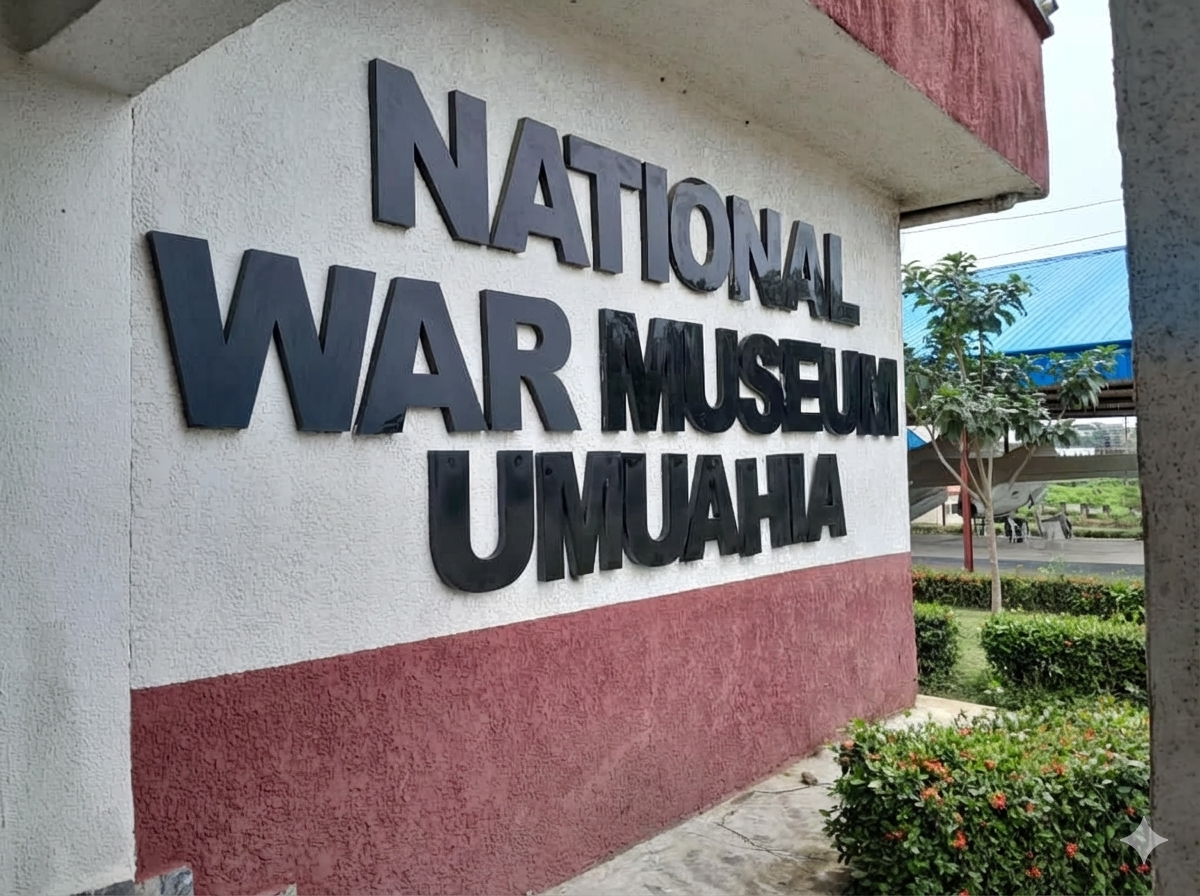
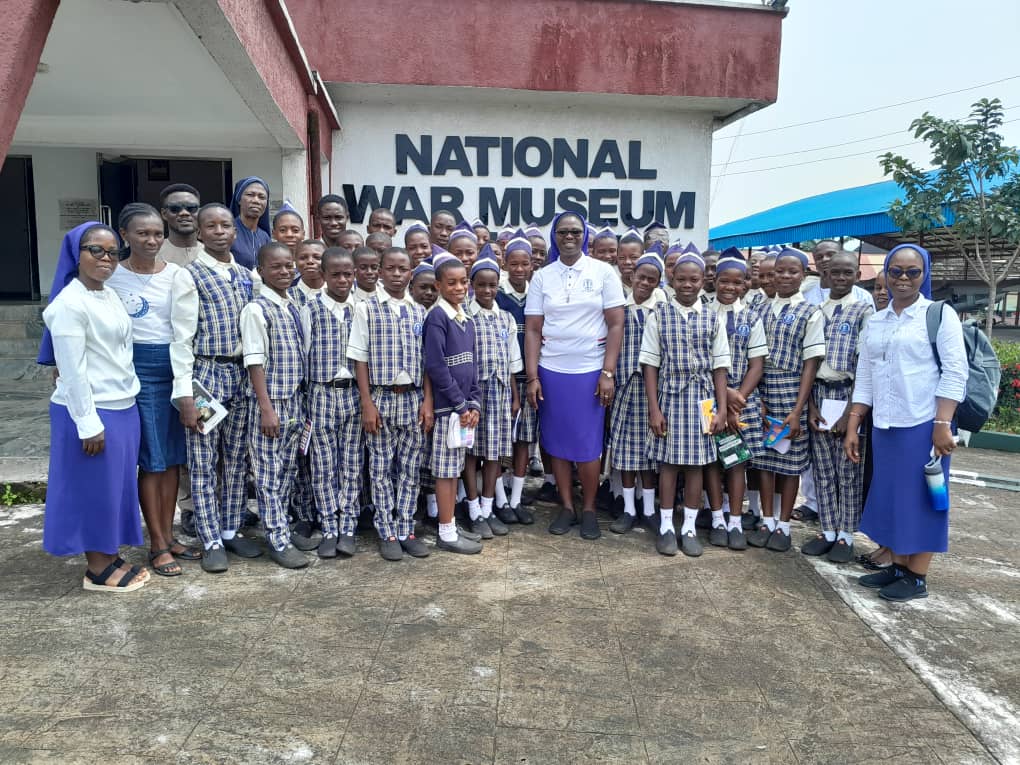
On this day, Thursday, the 23rd day of October 2025, the entire students and staff of Gioja Secondary school, Mgbele, set out for an excursion to the National War Museum, Umuahia. On our way, we saw so many things, such as Abia Tower, School of Nursing Obowo and other exciting things. At exactly 10:50 AM, we arrived at the excursion site (National War Museum, Umuahia
BRIEF INTRODUCTION OF THE WAR MUSEUM
According to the commentator, Mrs Stella, who addressed us under a mango tree, said that the Biafrans stayed at Enugu first as their capital, but due to bomb shots and fights, it was relocated to Abia State at Dr Michael Okpara’s compound, also known as Okpara’s Avenue. Dr Michael Okpara gave them food as the Igbo tradition demands, and they stated their reasons Of coming down to Imo old, comprising of Ebonyi and Abia, and after that, he gave them the adequate hospitality they needed, and they stayed back in his place, Ohuhu community, in Abia state.
Continuing, she went further to tell us that when the Biafrans stayed at Umuahia, the war continued to grow from strength to strength in Enugu, then the Biafrans thought of building a 27-foot underground bunker above the earth’s surface, which they called “Radio Biafra” because it is a place where the Biafrans do their broadcast to the whole world. The Nigerians thought that Radio Biafra was in Enugu state, and this led to the heavy bombing in Enugu State more than any other southeast region of this country.
Furthermore, on the 14th September 1985 National War Museum Umuiaha was launched by Major General Babatunde Idiagbor and was commissioned in the year 1989 by Gen. Dakhan Yah Bali through investigation of a slave who were sent to spy the nation and later recommended IMO old as the suitable place for the museum because it contains almost all equipment used during the Nigerian Biafran war which started from 6th July 1967 to 15th July 1970.
THE TOUR INSIDE THE NATIONAL WAR MUSEUM
Inside the museum, also known as the cell wall, it is divided into three sections or galleries which include:
*Traditional warfare gallery
*Arm force gallery and
*Civil warfare gallery
EXPLANATION OF TERMS ABOVE
Traditional warfare gallery: This is known as RAP (Research and production unit), here we have charts containing the pictures of our forefathers known as Homosapiens (wise man or man of wisdom). There are many ancient relics such as the Amazon of Dahomey. The word Amazon means breastless. This is true because the women of the Dahomey, when they give birth to their child, they cut off the left breast of their baby so as to enable them carry long guns. Also under the traditional warfare gallery, we have the Stone Age and the Iron Age. Our tour guide showed us the weapons our forefathers started with, which include: Stone, stick, metal, spear, arrows, javelin and so on. We also have an iron sword from Nsukka in Enugu state, formerly used during war and some ceremonial staff such as spare, Lantern, shield and others. All these weapons were used by an African soldier known as Shaka De Zulu from South Africa in 1824. They also made use of shork weapons such as swords which comes from Tiv in Benue state and other tribes. They showed us some charms that the ancient men used during their time to go to wars and some of the protectives which include the one made locally with woods, bamboo trees, metals and garawuri which some feathers are attached to it for protection which is called “ odieshi ” in Igbo land. We also saw so many things in that gallery which are the instruments used for communication such as: Ekwe, Ogene, Igba and so many other musical instruments. Also some locally made guns which uses gun powder and crack glasses to operate which include the one called “ogbunigwe”.
Arm force gallery: This is categorized into three parts which are: the army, which makes use of the land with a red and black color of flag,
Secondly the Navy which make use of the water with a white and green colour of flag
Lastly the Air Force which make use of the air with a white and grey colour of flag. Starting from the army, we saw the near newly harmonized army uniform and the evolution of the Nigerian army’s charts in 1922 . The Nigerian army were called the regiments of West Africa and in the same year they went to war in Britain and the war ended in 1945, but they came back to Nigeria in 1946 . In 1956 her royal majestic, Queen of England, Queen Elizabeth 1 renamed the Nigerian soldiers as “ soldiers of Queen’s own regiment” But in 1982 , they were called the Nigerian army. In the army uniform we have the hart, bottle of water, shield for the foot and the mystery pan which is used for eating. During the British time of colonialism, the Nigerian army was called the band group in the year 1954. We have LT. W. Basey as the first colonial head of army in Nigeria and LT. Aguyi Ironsi as the second colonial head of army in Nigeria. The field Marshall is known to be the highest rank of Army in the whole world.
In the Naval section, it was said that the Nigerian Navy was set up on the 1st of April 1955. And the highest rank of the Navy in the whole world is called the “admiral” their war uniform is called the combat and among all the chief of naval staff, Gen. Azubuike Ihejirika is the only Igbo man that has served as the naval office. The current chief of the Naval in Nigeria is El. Ogala and the 1st Nigerian naval officer is Cornell Kumbe.
In the Air Force section We have the Survival kit for their military panel and having their biggest jet as the “Russian illusion 28- anti- aircraft plane”. The Nigerian Air Force was established on 10th of April 1964 to complement the military air defense system of the Republic of Nigeria. The head of the Air Force is called an Air Marshall.
The last gallery called, Civil warfare gallery: In this gallery, we have our past (leaders) picture of Biafran engineers and the Biafrans radio. And also the charts of our past leaders, starting from the military regime down to the civilian regime. We saw the first and original Biafran’s flag which has three colors:
THE INDICATION OF BIAFRAN’S FLAG COLOUR
It is pertinent to note that the Biafran flag has three colors, namely Red, black, and green color and the rising sun
Red colour: Signifies the bloodshed of Biafrans during the war.
Black colour: Signifies the Biafrans mourning their loved ones during the Nigerian-Biafran War.
Green colour signifies the fertile land of Agriculture in the Biafran land. And the yellow Star kind of picture at the centre of the flag, which is known as the rising sun.
The rising sun, which is seen as the Biafran rising sun, signifies that the sun rises from the east.
We also saw the picture of the leader of Biafra when he was young, in the person of Gen. Chukwuemeka Odimegwu Ojukwu. In the civil war gallery, we got to know that two coups took place in Nigeria. The first coup was on 15th January, and the second coup was on 29th July 1966, which is popularly known as “Coup D’Etat” and the charts of some people, including Prof. Chinuolumuogu Achebe and the host of others. In the voice of Biafran bunker under the civil war gallery, we saw the Biafra Radio which is used to broadcast information as at then; the charts of those that suffered during the war including breastfeeding mothers who were suffering from kwashiorkor, the picture of the dead body of Henry block, the British man who helped the Biafrans to fight during the war, an unarmed soldier who was killed; the Ojukwu bucket (bomb) and some other weapons used during and after the war.
Note: The Catholic Church helped Biafrans during the war by providing them with food and some weapons, which they put inside sealed food, bread, et cetera.
In the reunification wall, we saw how the Nigerians and Biafrans were rejoicing due to the war having ended and the Nigerian and Biafrans soldier hugging themselves as a sign of reconciliation. And the war was declared no victory no Vanquish, which means that nobody won. We also saw the chart of where the second in command of the Biafrans, who is Gen. Philip Effiong, was dialoguing with Yakubu Gowon, the leader of the Nigerian army. But before then, Gen. Chukwuemeka Odimegwu Ojukwu had fled to Saudi Arabia for his safety.
We saw the ancient Biafran coat of arms, which has so many things and their significances; these include an Eagle, which signifies peace, a Leopard, which signifies strength, an Elephant statue or horn, which signifies wealth, a Biafran rising sun, which signifies that the sun rises from the east, and Manila, which is Biafran’s olden days money. After that, we went out through their escape route, which was described by our tour guide as a way of escaping after broadcasting to Ojukwu’s bunker through a trench that is covered with grass and palm fronds. There is a pipe on the ground outside called the open vent ventilation, which is used to trap air oxygen inside or into the underground.
When we got to the open-air gallery outside the underground (including the national War Museum environment) we saw the remains of the radio Biafran in the white bus shape, we saw the remains of the armoured tankers, locally made by the Biafran engineers, and they were captured by the Biafrans in so many places, including Oguta. We also saw the big “Ogbunigwe” which contains crack glasses, gun dust and other sharp objects used during the war, including aeroplanes which are Russian Illusion 28 anti -aircraft, helicopters and small aeroplanes known as “sensors” but were nicknamed Ojukwu baby or Ojukwu mosquito by the Nigerian army. There is also a brown pot known as the Ojukwu cooking pot or Ojukwu mini refineries, which is used to refine locally made petroleum used to power and fuel the Biafrans’ locally made armoured tankers. We also have a ship known as NNS (Nigerian Naval Ship) and a small boat inside it called the emergency boats or Aso boats, including two guns. The 1st and small gun, which is located at the back of the ship, is known as the anti-aircraft gun B, because it is used to shoot down planes, and the second and biggest gun, which is located at the front of the ship, is known as anti-aircraft gun A. After all these experiences, we took some pictures with our tour guides and left the National War Museum Umuiaha at around 1:20 PM, having Mr Ekeh Christian and Mrs Amaoge Mercy as our tour guides.
OJUKWU BUNKER
Introduction and Brief history about OJUKWU BUNKER : The Ojukwu bunker is an underground shelter built during the civil war by the Biafrans engineers. With the movement of the government of Biafra from Enugu to Umuahia the town became a target for intensive bombing. This necessitated the construction of the bunker. The bunker is about 8metres deep. The bunker was used for meetings by Biafran leaders then when Doctor Michael Okpara was the premier of eastern region. The bunker is about 26.9 feet under the ground. The bunker construction was contributed by so many people including Mr. Joel Onyenaekwe. The bunker was originally known as the subterranean office of the government of Biafra. Inside the bunker are some furnitures, stores, toilets, parlour, bedroom and others. Major Gen. Chukwuemeka Odimegwu Ojukwu was the leader of Biafra having doctor Philip Effoing, as his second in command and Gen. Yakubu Gowon was the leader of the Nigerian army. Inside the Ojukwu bunker are charts of weapons used during the war which includes the Ojukwu bucket, aircrafts and the locally made gun weapons including those captured during the war, those going to war, those that suffered from kwashiorkor, a British man named Henry Block who was killed because of his helping hand to Biafrans for fighting the war. He supported the Biafrans military
When we entered the underground, it was deep and cool, the first room there is known as an upper room for security purposes and the second room is a Palour or the conference room. In the room, there are charts such as chart of Mr. Odimegwu Ojukwu, professor Chinuolumuogu Achebe, Mr. Pius Onuigbo and professor Kenneth who was the 1st vice chancellor of the university of Ibadan, doctor Michael Okpara, doctor Akanibia and other individuals. The room also have a cupboard which serve as their bank/save for storing of their money and other vital information or documents. The bunker have two escape routes (Male and female ) the first one is vertical while the second one is diagonal and it is also known as a war say.
The final part of the tour was at Doctor Michael Okpara’s bunker
In doctor Micheal okparas bunker, the first room is known as Okpars’ dining and there is an underground which has an ancient AC (air conditioner) called the wall block which supplies air inside the underground through the pumping out of water and it is made of metal.
CONCLUSION
To draw the curtain here, the national war museum Umuahia is the only War Museum in West African countries. it plays a vital role in preserving Nigerians military heritage and promoting a deeper understanding of the nation’s history. During the war, the national War Museum is a must visit destination for anyone interested in Nigerian history.
TO GOD BE THE GLORY
_Thank God, they did not die in vain.
Composed by:
Onuoha Emmanuel Mmaduabuchi, Editor
Ejekamba promise Ihechukwu, Ass. Editor
And
Okwuoha Paschal Chidiebere, Editor in Chief